
Look for design quality you would want for your own products—and the expertise to turn that vision into reality. In heavy machinery design, visual appeal and a distinctive identity need to work together with user needs, technical feasibility and commercial objectives.
A good design partner should help you develop a product that strengthens your brand, works well for its users and can be manufactured at your intended cost and production volume. When reviewing a portfolio, look at both the quality of the design and how it was developed. What requirements shaped the solution, what alternatives were considered, and how far did the team take the work?
A striking concept rendering captures attention. The reasoning behind the design decisions—and evidence of implementation—builds trust.
At Edea Design, we combine industrial design and vehicle design, user interface design, mechanical engineering and the expertise of our in-house prototyping workshop. The following seven considerations draw on our experience of developing machinery together with manufacturers and will help you assess which partner is the right fit for your project.
1. Look for design that strengthens your brand
A portfolio should make you think: we would like this team to design our products, too.
Consider the overall proportions, the treatment of forms and surfaces, and the attention to detail. Do the designs look refined and coherent? Do products for different customers have a character of their own, or do they all reflect the consultancy’s house style?
Developing your brand through your products can mean strengthening an existing design language, evolving it or finding a completely new direction. Look for a partner who can discuss not only how your products look today, but what their next generation should be like.

XCMG: a considered design language, down to the details
For XCMG’s skid-steer loader concept, we developed a distinctive identity through clear forms, parallel lines and carefully considered details. A hexagonal theme drawn from XCMG’s logo was repeated in the grille and protective mesh, while dark colours on the sides and rear unified the appearance and made component boundaries less prominent. By emphasising key features and playing down unnecessary visual elements, we created a coherent design that expressed the customer’s identity through the product itself—not simply through a logo applied to its surface.
When considering a partner for your own products, ask how it would interpret your brand and which qualities it would preserve, strengthen or change. You should be able to understand the reasoning behind the proposed design language and assess whether it expresses the identity you want your next product generation to have.
Ask: “How have you developed a customer’s product identity, and what makes the result good design in your view?”
2. Find out what the team has actually delivered
Once a portfolio project has caught your attention, look into the work behind it.
What was the original assignment? What was the consultancy responsible for, and what did the customer handle internally? Was the assignment an early-stage concept, a cabin redesign or detailed design for production? Does the image show a proposed design, an evaluation mock-up or a manufactured product?
A recognised customer name tells you that a collaboration took place. Understanding the work involved helps you assess how relevant that experience is to your own project.

Hyster-Yale: expertise from the physical operator environment to digital interfaces
Our collaboration with Hyster-Yale has included the design of vehicle exteriors, operator environments, and displays. To inform the work, we have studied people’s tasks and workflows in both warehouses and port container-handling operations. In our own workshop, we have developed and evaluated the operator environment using physical models, while display design has addressed how operators access information and functions.
When reviewing a comparable project, establish which parts of the work the consultancy handled and how it collaborated with the manufacturer’s own team. This helps you assess whether its experience matches the capabilities you need—not simply whether it has worked on a similar type of machine.
Ask: “What was your team responsible for in this work, and how would that experience benefit our project?”
3. Make sure the design supports your business objectives
The success of a design should be assessed against what the product is intended to achieve.
Are you aiming to strengthen your brand’s position, renew a machine range, reach new customers or make an existing product more competitive? What needs to be retained, and where do you need a fresh perspective?
A sound commercial rationale goes beyond controlling manufacturing costs. It also includes the product’s intended market position, customer expectations and the value you aim to create through your investment in design. Agree these objectives with your partner so that you have a shared basis for developing and evaluating proposals.
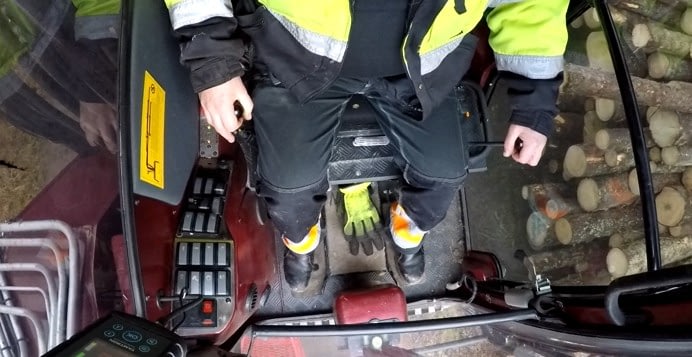
Hiab: several objectives, one design challenge
Our design assignment for Hiab’s forestry-crane operator station began with a brief combining safety, ergonomics, operational needs, structural standardisation, design and cost-effectiveness. It addressed practical requirements such as control positions, visibility and a common frame structure. The brief therefore established a set of interconnected requirements for our work, covering how the product would be used, configured, built and presented.
For your own project, start with the knowledge your organisation already has. Together with your partner, identify which requirements are established, which assumptions need testing and where additional customer, user or future insight would help. Agree how any missing information will be gathered and analysed, keeping the scope focused on the decisions your project needs to make.
Ask: “How do you connect the design work to our product strategy, commercial objectives and the needs of our own team?”
4. Ask how user insight improves the product
The success of a design should be assessed against what the product is intended to achieve.
Look for evidence of user-centred design in the decisions the team makes.
Ask for an example of what was learned about users and how it influenced the solution. The number of interviews or workshops alone does not tell you the value of the work. What matters is whether that understanding helped improve the product, including identifying needs or opportunities that the original brief had not anticipated.
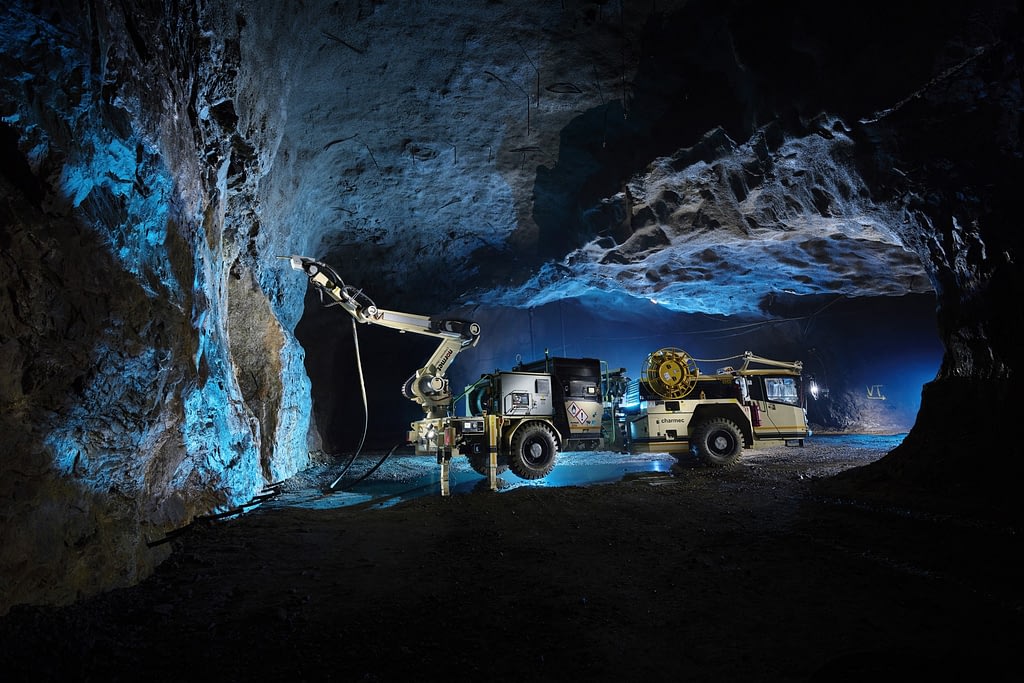
Normet Charmec: rethinking the interaction, not just the screen graphics
In our work on the interface of Normet’s Charmec charging machine, user research revealed two problems with the previous, largely text-based touchscreen. In the dirty mining environment, operators avoided touching the screen; some used knife tips instead, damaging it. Some operators were also unable to read and relied on memory to navigate the interface. We designed a graphical interface that did not require reading, simplified the key task flows to make essential tasks easier and reduce opportunities for error, and added physical buttons so the interface could be operated without touching the screen. We prototyped the combined interface and controls in our own workshop.
For your project, ask whether the partner can look beyond the screen or component named in the brief to understand the working situation around it. User insight may point to changes in task flows, physical controls or the way these work together. Look for a clear connection between what the team learned and the design decisions it made—not simply a description of the research methods used.
Ask: “Can you show how something you learned about users changed the solution you proposed?”
5. Look for in-house expertise in materials and manufacturing
Your design partner should bring its own understanding of materials and manufacturing—not simply accommodate decisions made by others.
Look for a team that can propose and justify choices of materials, structures and manufacturing methods, and develop them together with your engineers and component manufacturers.
Target production volume is a key starting point. The most suitable solution is not automatically the most technologically advanced or the one using the simplest manufacturing process. It needs to work at the intended volume. Alongside unit costs, assess the tooling and production investments, technical requirements and desired level of quality.
Bring these questions into the discussion before concept development begins, so that manufacturing expertise can help shape the solution rather than merely check it afterwards.

Valtra: a manufacturing method opened up a new possibility
We designed a battery-housing assembly for Valtra and developed its implementation together with Valtra and component manufacturer Motoplast. The assembly combined space for the battery, a toolbox and a windscreen washer-fluid reservoir. Rotational moulding enabled a double-wall structure that provided the required rigidity around the battery, while the liquid-tight space between the walls was used as a 12-litre washer-fluid reservoir. The manufacturing method was therefore more than a way of producing a planned shape: its characteristics helped shape what the component could do.
Ask your partner to explain why a proposed material, structure or manufacturing method suits your requirements and production volume. Look for the ability to develop alternatives with your engineers and suppliers, rather than simply accommodate choices already made. You should be able to compare the options and understand their implications for appearance, performance, tooling investment and production costs.
Ask: “How do you develop material and manufacturing solutions that suit our design objectives, technical requirements and production volumes?”
6. Find out how designs are evaluated and developed
Before committing to a design, establish what still needs to be evaluated and how.
Ask what the team intends to investigate, with which tools and at what stage. The value of a model or prototype lies in the questions it answers and how the findings influence subsequent decisions.
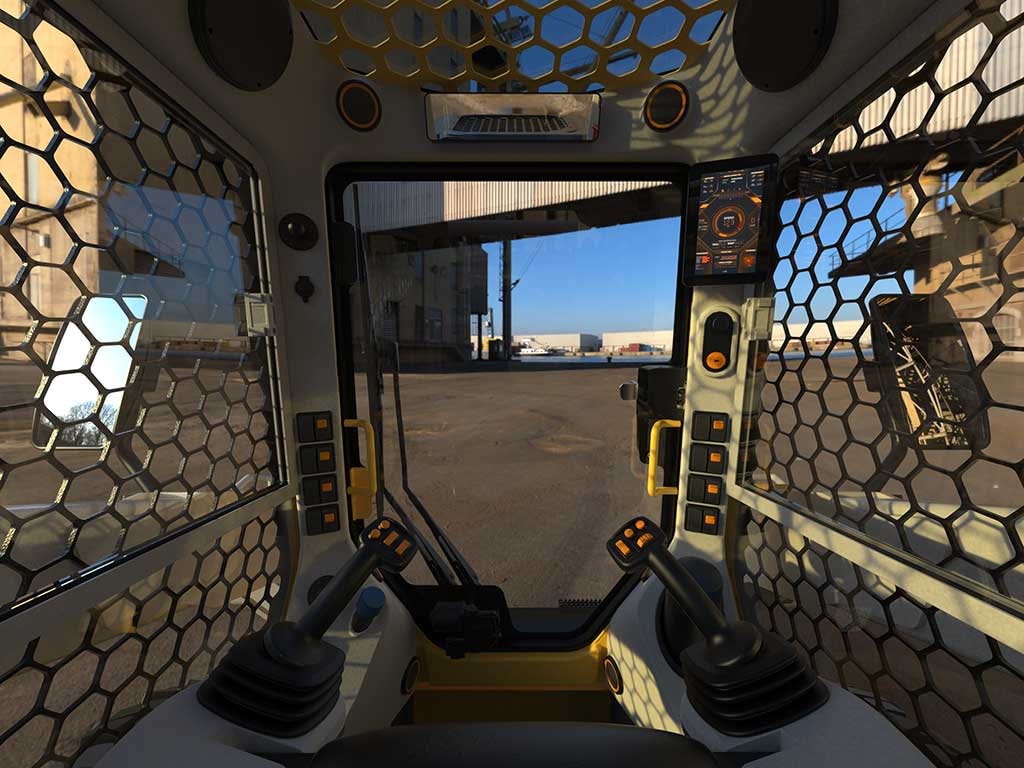
XCMG: physical and virtual models complemented each other
For XCMG’s skid-steer loader concept, we built a full-size cabin mock-up in our own workshop, including an adjustable seat, controls and the cabin door. Operators of different sizes evaluated the mock-up. Alongside it, we created a virtual model of the complete machine, particularly to assess visibility from the operator’s position. The models served different purposes: the virtual model supported visibility assessment, while the physical mock-up enabled hands-on evaluation of the operator environment.
For your project, define what each model needs to reveal, who will evaluate it and which design decisions depend on the findings. Agree how the models will evolve as the design develops, rather than treating them as one-off presentation materials. Also distinguish between usability evaluation, engineering tests and formal approvals, so that you understand what each method can establish and what still needs to be assessed.
Ask: “What will you evaluate, with whom, and how will the findings guide subsequent design decisions?”
7. Choose a team that can take the design forward with you
Your design partner will work alongside your own organisation. The practical arrangements for collaboration should therefore be part of your selection criteria.
Meet the people who would do the work. Agree which decisions belong to your team, where the design partner is expected to take the lead and when suppliers need to be involved. Clarify how progress, changes and approvals will be documented. Look for a team that listens carefully and can also challenge your assumptions constructively.

Lundberg: from individual details to the bigger picture
In developing the Lundberg 60 series, we worked closely with the customer’s product development and manufacturing teams. Our contribution extended from the machine’s appearance to the operator environment and functional solutions, connecting individual details with the design as a whole. Reflecting on the collaboration, Ville Pesonen of Lännen Tractors said: “Edea was genuinely involved throughout the entire development process.” His account highlighted Edea’s contribution both to individual solutions and to the way the overall design came together.
For your project, agree how responsibilities, progress and decisions will be managed, and which activities call for remote meetings, workshop reviews or on-site work at your factory. Clarify the support you need during prototype and pre-production builds, together with deliverables, timing, costs and change procedures. You should understand how the partner will work alongside your team and suppliers to preserve the agreed design and user experience as implementation details evolve.
Ask: “Who will work with us, what does the assignment include, and how will you help preserve the agreed design through implementation?”
Choose both vision and the ability to realise it
Choose a partner who can help you achieve the ambitions you have for your product and brand. Look for design quality you value, experience relevant to your project and a clear account of how the team will work alongside yours.
Use the portfolio to assess design capability, project discussions to understand the work behind it, and the proposal to agree what your project will receive. Your partner’s contribution should complement your own team and address the capabilities your development programme needs.
Design quality and feasibility are not alternatives. The aim is a product in which beauty, user experience, technology and commercial considerations reinforce one another.
Are you renewing a machine range, developing your brand’s design language or improving the operator environment? Get in touch with Edea Design, and let’s talk about your objectives and the expertise you need alongside your own team.